Skip to content
Independent service company Refrigeration only: built-in and integrated columns, freezers, wine storage, undercounter units and ice makers. Mon–Fri 8am–6pm · Sat 9am–4pm · Sun closed
Setpoints 38°F Fresh food 5°F Ice production 0°F Freezer
Index · 11 notes

Service notes

Notes is this company's word for guides. Each one covers a single failure mode we see repeatedly in Northeast Florida, written so that a homeowner can tell whether to clean something or call someone.

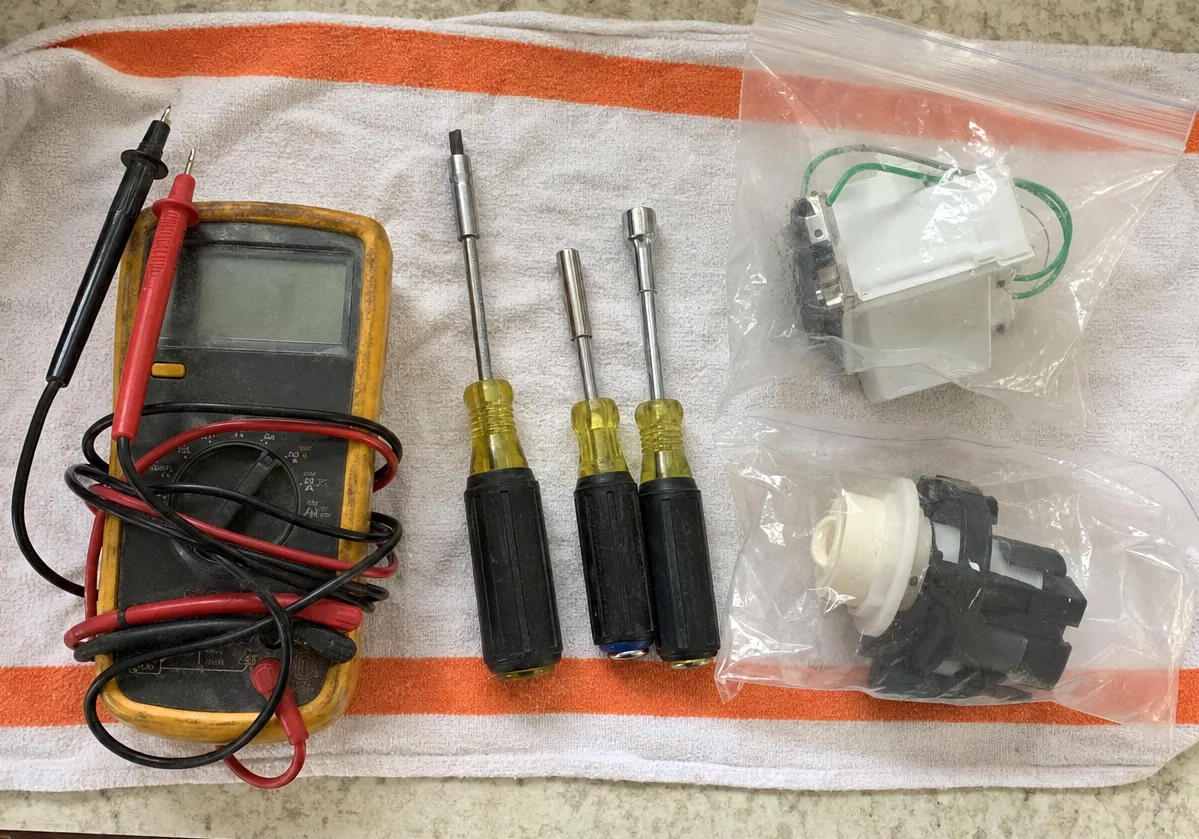
A worn multimeter beside nut drivers on a kitchen towel, the leads coiled loosely across it.
Every note here started as something measured on a job, not read in a manual.
11 notes Topics: comparison, condenser, control boards, cooling, corrosion, defrost, diagnosis, doors, drains, error codes, freezer, gaskets, hinges, ice, ice makers, local conditions, maintenance, parts, repair or replace, safety, sealed system, troubleshooting, warranty, wine RSS feed
01

Ice bin latched vs unlatched in a Sub-Zero freezer

A seated bin lets the ice maker fill it, read the level and close the drawer tight. A loose one fakes a fault that a minute of reseating usually fixes.

ice · freezer · comparison

Applies to
  • Classic (CL)
  • Designer (DEC/DET)
02

Sub-Zero wine cooler not cooling, checked in order

Most warm wine cabinets recover after a condenser cleaning and a full day of patience. The ones that do not are pointing at the fan or the sealed system.

wine · cooling · troubleshooting

Applies to
  • Designer (DEC/DET)
  • Classic (CL)
03

Years six to twelve — the coverage most owners miss

This is the single strongest honest argument for using an independent shop, and it is missed constantly because it sits inside a warranty most owners assume expired at year five.

warranty · repair or replace · sealed system

Applies to
  • Classic (CL)
  • Built-In (BI)
  • Designer (DEC/DET)
  • Integrated (IT/IC)
04

Storms, outages and the control board that fails three weeks later

A built-in refrigerator is the one appliance in the house that nobody unplugs. In this metro that has consequences, and they arrive late enough to be misread.

control boards · local conditions · diagnosis

Applies to
  • Classic (CL)
  • Built-In (BI)
  • Designer (DEC/DET)
  • 600 / 700 Series
05

The door is not locked

Two of the most common door complaints are not faults at all. Knowing which is which saves a service call, and knowing when a door genuinely is wrong saves a gasket.

doors · hinges · gaskets

Applies to
  • Designer (DEC/DET)
  • Integrated (IT/IC)
  • Classic (CL)
  • Built-In (BI)
06

Salt air, condensers and the coil you cannot clean

On the coastal ZIP codes the condenser problem is not dust. It is metal loss, and it is the reason a beach cabinet ages differently from an identical one ten miles inland.

corrosion · condenser · local conditions

Applies to
  • All series at coastal addresses
  • Undercounter (UC)
  • 400 Series wine
  • Built-In (BI)
07

Why an ice maker stops, in the order we check it

An ice maker has a temperature floor, a fill volume, a harvest cycle and a supply, and each one fails with its own signature. Checking them out of order costs a part.

ice makers · diagnosis · parts

Applies to
  • All ice makers
  • Classic (CL)
  • Built-In (BI)
  • Designer (DEC/DET)
08

The drain is frozen, not clogged

Water on the freezer floor is not a plumbing problem. It is a defrost problem, and the two things people reach for to fix it are the two things that turn it into a sealed-system job.

defrost · drains · safety

Applies to
  • Freezer columns
  • Built-In (BI)
  • Classic (CL)
  • Integrated (IT/IC)
09

EC50, EC40 and EE — read them, do not clear them

A stored code tells a technician when the fault started and how the control responded. Clearing it before the visit throws that away, and sometimes costs a second visit.

error codes · diagnosis

Applies to
  • Classic (CL)
  • Built-In (BI)
  • 600 Series
  • 700 Series
10

Condenser cleaning, and the 48°F rule

Clean it every six to twelve months. Then apply the two rules that tell you whether cleaning was ever going to fix the problem you have.

maintenance · condenser · diagnosis

Applies to
  • Classic (CL)
  • Built-In (BI)
  • Designer (DEC/DET)
  • Integrated (IT/IC)
11

Two sealed systems, not one

A warm fresh-food compartment above a freezer still holding 0°F is not a contradiction. It is the expected presentation of a fault on one of two independent sealed systems.

sealed system · diagnosis

Applies to
  • Classic (CL)
  • Built-In (BI)
  • Designer (DEC/DET)
  • Integrated (IT/IC/ID/IW)
Standing rule

Do not clear a service code before the technician arrives.

A stored code records when the excursion started and how the control responded. On a cabinet with two independent sealed systems that is frequently the fastest route to identifying which circuit failed. Clearing it costs time on the visit, and sometimes costs a second visit.

The one exception is a code raised by a condenser restriction that has already been corrected, and even then only once both compartments are reading near setpoint.

Price bands

What does the work behind these notes cost?

Every note ends at the same place, which is a measurement that says call or do not call. If it says call, this is the book the work is quoted from.

Bands that fit this page, parts and labor
Work Typical range
Diagnostic visit, credited toward the repair $80
Evaporator or condenser fan motor $250–$600
Compressor or sealed-system repair $900–$2,360
Electronic control board $440–$790
Door gasket or seal replacement $250–$630

Parts and labor together, on this equipment, in this market. The band is where the work lands before it is measured; the figure itself is written down after the diagnostic and before anything is ordered. $80 of it is the diagnostic, credited toward the repair once you approve the work, and $2,360 is the top of the range on this page rather than a price anybody expects to pay. The whole book is here.

Customer feedback

What the visits behind these notes looked like

4.5 out of 5 across 90 customer reviews. Read all of them.

The column ran loud enough to hear from the next room. It was the evaporator fan blade clipping a build-up of frost, and behind that a door that had never sealed properly since the kitchen was refitted.

Simone O.2026-03-03

The machine ran but dumped into a bin that never filled. The ejector was slipping on a stripped drive. He showed me the worn splines before he changed anything, which I appreciated more than he probably realised.

Colm E.2026-03-26

The door alarm kept sounding at night with the door plainly shut. The magnetic seal had rolled at the hinge end and the cam was worn. New gasket, cam adjusted, and the alarm has not gone off since.

Lucia D.2025-12-03

Reference

Questions about the notes

What are these notes actually for?
Measuring before phoning. Each one sets out a single failure mode, what to read, and the point at which reading stops being useful and the cabinet needs a technician. Several of them end with the honest answer that the fault is not worth a visit yet.
Do you publish part numbers in them?
Water filter numbers yes, because they are fixed per series and a homeowner can buy one. Control-board numbers no, because board fit is serial-dependent and quoting one from a website is how people end up paying for two boards.
Which of this work can a homeowner safely do?
Condenser cleaning with the power off, a controlled defrost, and reading temperatures. Nothing that opens a sealed refrigeration system. EPA Section 608 certified technicians — the federal requirement to open a sealed refrigeration system.
Independent service company

Book a diagnostic

$80 flat diagnostic, credited toward the repair. Written estimate before any part is ordered or any work begins.

Mon–Fri 8am–6pm · Sat 9am–4pm · Sun closed. Scheduled appointments only. No after-hours or emergency service.

40 miles by road from Fruit Cove and St. Johns County. Drive distance, not straight-line radius.

90 days labor, 365 days parts, genuine OEM components.

EPA Section 608 certified technicians — the federal requirement to open a sealed refrigeration system.